

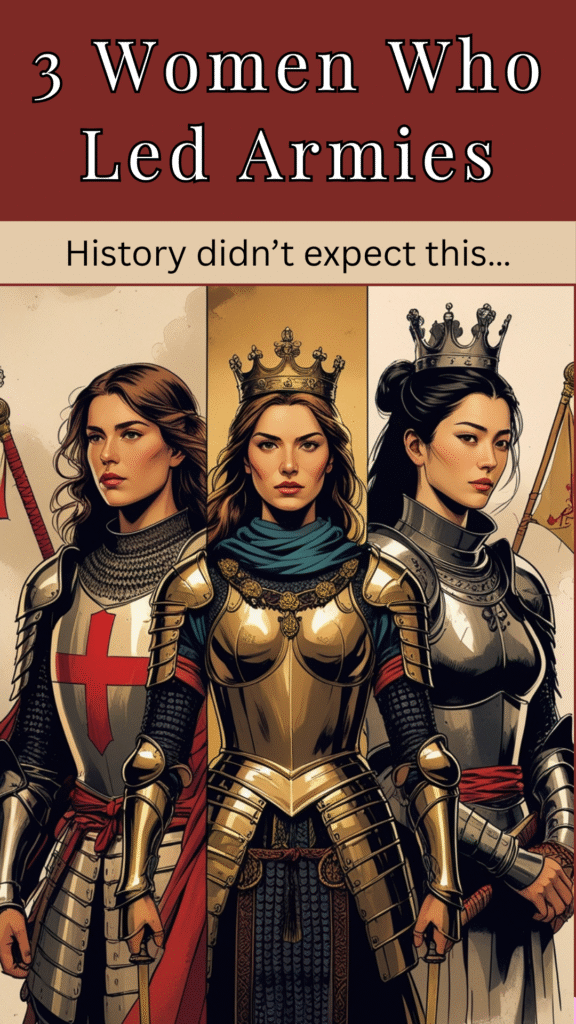
History loves to spotlight kings and conquerors—but it often forgets the women who led armies into battle. These medieval female warriors stepped into power, defied expectations, and changed history in ways most people never hear about.
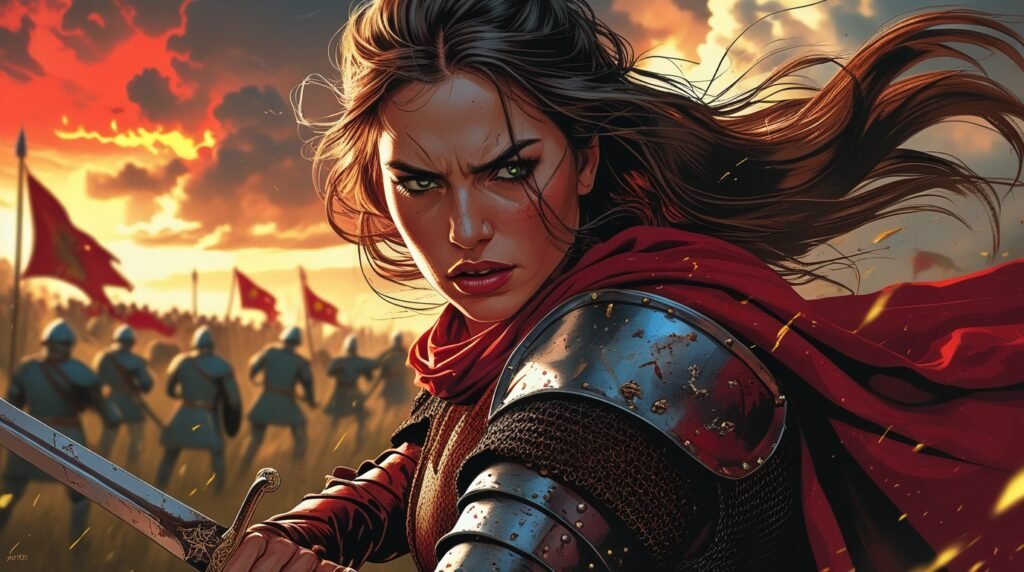
Medieval Female Warriors Who Led Armies Into Battle
History has always been quick to tell the stories of kings, knights, and powerful men—but it tends to go quiet when it comes to the women who stood on the battlefield beside them… or led the charge.
Hidden between the lines of medieval history are medieval female warriors who commanded armies, made life-or-death decisions, and walked into battles they were never meant to fight.
These weren’t just women who “helped” from the sidelines. They wore armor. They gave orders. They inspired fear, loyalty, and sometimes even legend.
And the most fascinating part?
Some of their stories were celebrated… while others were softened, rewritten, or nearly erased altogether. Below I am going to share the stories of three brave warrior women.
Joan of Arc

At just 17 years old, Joan of Arc wasn’t supposed to be anywhere near a battlefield—let alone leading an army.
Born into a simple farming family in France, Joan had no military training, no status, and no real reason to be taken seriously. But she claimed she was guided by divine visions—voices she believed were sent to help her save France during the Hundred Years’ War.
And somehow… people listened.
She stood in front of experienced soldiers—men who had spent their lives fighting—and convinced them to follow her into battle. Not only that, she led them to victory.
Among those who fought alongside her was Gilles de Rais—a nobleman who would later become infamous for reasons far darker than war, adding an unsettling layer to the story of the army that once rallied behind her.
Joan became a symbol of hope for a country that was losing. Her presence alone seemed to shift the energy of the war, and under her leadership, French forces reclaimed key cities, including the heavily guarded city of Orléans.
But this is the part most people don’t realize…
Joan didn’t fall in battle.
She was captured, handed over to the English, and put on trial—not as a soldier, but as a heretic.
At just 19 years old, she was burned alive in front of a crowd.
The same girl who had once been seen as a savior was condemned, her story twisted into something dangerous instead of miraculous.
Years later, she was declared innocent. Even later, she was named a saint.
And today, she remains one of the most powerful and unforgettable medieval female warriors—not just because she fought, but because she led, believed, and stood firm in a world that never expected her to.
Margaret of Anjou
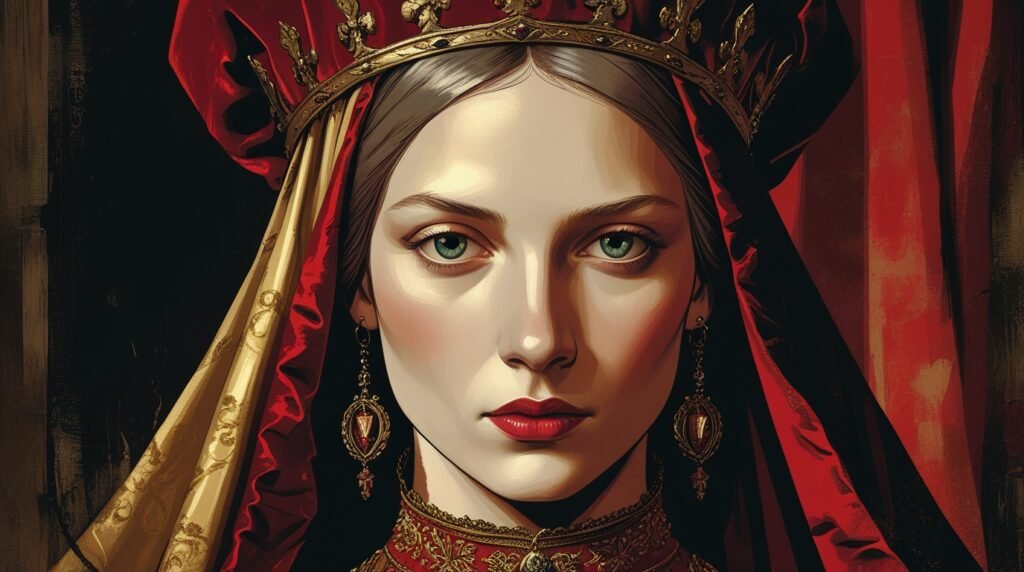
If Joan of Arc felt like a miracle on the battlefield, Margaret of Anjou felt like a storm gathering at court.
Born into the powerful House of Anjou in 1430, Margaret became queen of England through her marriage to Henry VI, a king whose reign was marked by instability and periods of serious mental collapse. In a world where women were expected to stay in the background, Margaret did the opposite. As Henry’s government weakened, she stepped forward as one of the fiercest defenders of the Lancastrian cause, determined to protect both her husband’s crown and her son’s future
And this is what makes her story so compelling: Margaret was not simply a queen standing loyally beside her husband. She became a political force in her own right. When Richard, Duke of York, rose in power during Henry’s incapacity, Margaret saw exactly what was at stake. This was not just a court rivalry or a petty family feud. It was a direct threat to her husband’s rule and to the inheritance of her son, Edward of Westminster. While powerful men around her hesitated, negotiated, and betrayed one another, Margaret developed a reputation for being relentless.
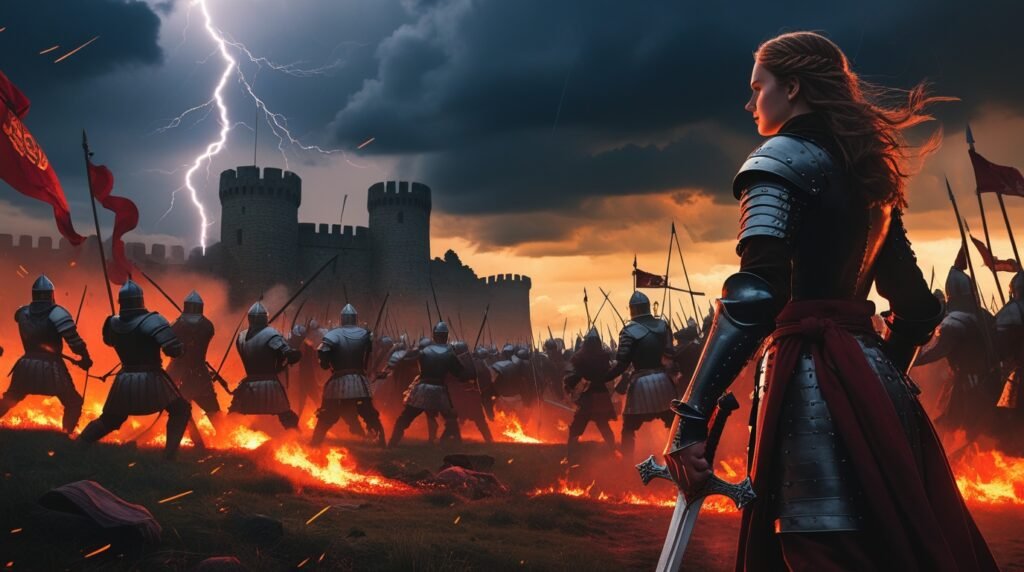
As the Wars of the Roses tore England apart, Margaret rallied allies, pushed the Lancastrian cause forward, and became one of the most feared women in English politics. She is especially remembered for the fierce struggle surrounding the campaigns of 1460 and 1461, when the fate of the crown seemed to shift by the month. At the Second Battle of St Albans in 1461, the Lancastrians won a major victory and recovered Henry VI, proving that Margaret was far more than a symbolic figure. She was at the center of a brutal dynastic war, fighting to keep her family from being erased.
But like so many powerful women in history, Margaret was painted by her enemies as dangerous, unnatural, and power-hungry. That part of her story is important too. Men who fought ruthlessly for power were often remembered as strong. Margaret, doing many of the same things, was remembered by some as a villain. And yet without her, the Lancastrian resistance might have collapsed far sooner.
Her ending was tragic. In 1471, her son was killed after the Battle of Tewkesbury, Henry VI died soon afterward, and Margaret’s long fight for her family’s survival was effectively over. She spent her final years in exile in France, far from the throne she had battled so hard to defend. Still, she remains one of the most striking examples of medieval female warriors—not because she fit the image of a knight in armor, but because she fought with political instinct, endurance, and a refusal to surrender when everything around her was collapsing.
Tomoe Gozen
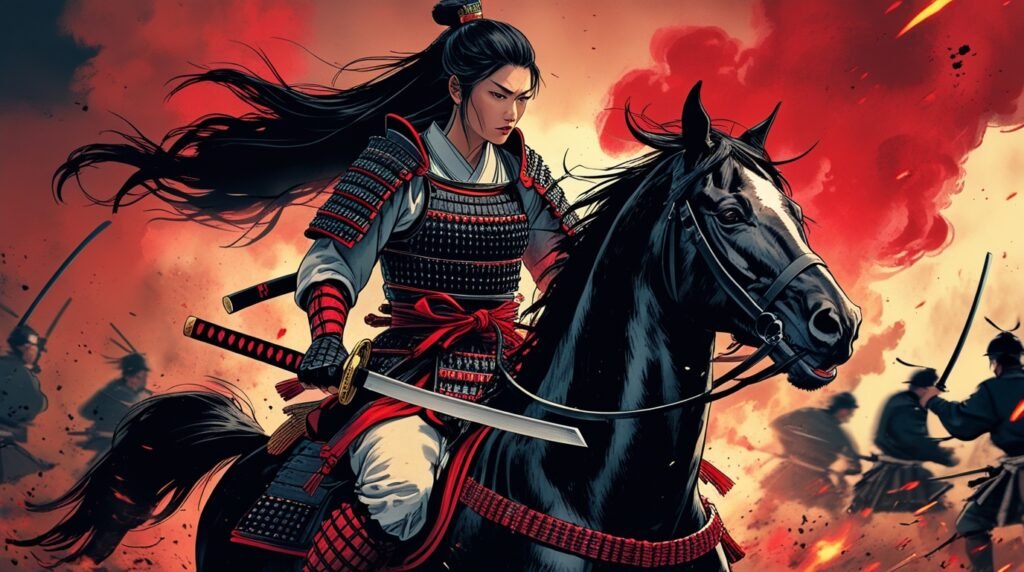
If Margaret of Anjou was a storm at court, Tomoe Gozen feels more like a figure stepping out of legend.
Tomoe is one of the most famous women in Japanese warrior tradition, but she is also one of the hardest to pin down with certainty. Much of what people know about her comes from The Tale of the Heike, a medieval war epic based on the Genpei War, the brutal conflict between the Taira and Minamoto clans in late 12th-century Japan. That means her story sits in a fascinating space between history and legend—which, honestly, only makes her more compelling.
According to that tradition, Tomoe served Minamoto no Yoshinaka and was celebrated not just for beauty, but for skill. She was described as a warrior who could ride, shoot, and fight as fiercely as any man around her. That matters, because Tomoe was not remembered as a quiet noblewoman standing behind the scenes. She was remembered as someone who entered the violence of war itself. In a period shaped by clan conflict, shifting loyalties, and battlefield honor, that was no small thing.
And this is where her story gets unforgettable.
At the Battle of Awazu in 1184, as Yoshinaka’s position collapsed and defeat closed in around him, Tomoe was said to have remained among the last fighters at his side. Later retellings describe her cutting through enemy warriors and taking down a powerful opponent in the chaos of the final struggle. Whether every detail happened exactly as later stories claim is still debated, but her image endures for a reason: Tomoe Gozen became the symbol of the woman warrior who did not retreat from battle when everything was falling apart.
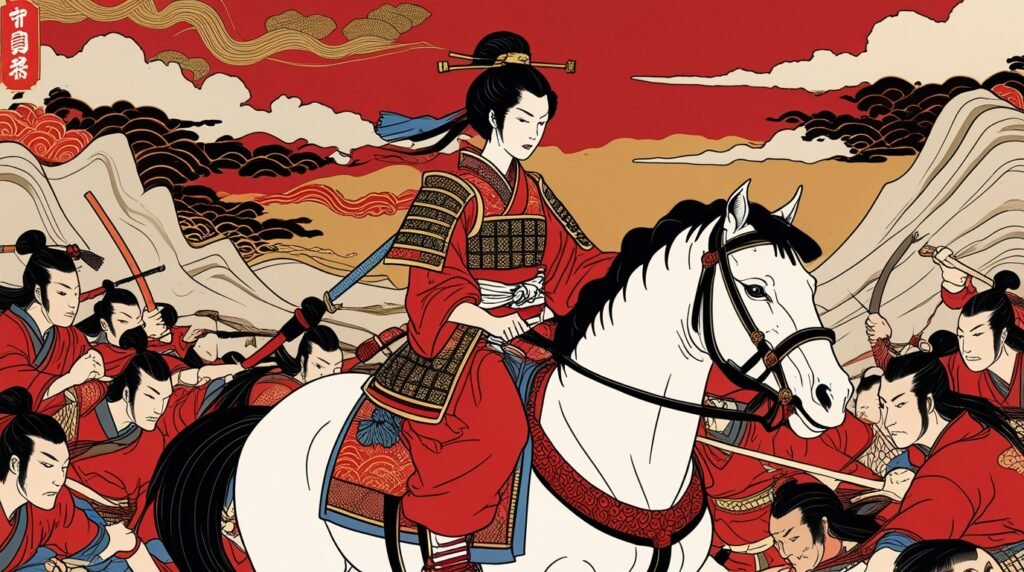
What happened after that is even less certain. Some versions say Yoshinaka ordered her to flee before his final stand. Others suggest she survived and disappeared into a quieter life, possibly even becoming a nun. That uncertainty is part of what keeps her story alive. Tomoe is not just remembered because she fought. She is remembered because she lingers in that rare place where history leaves room for mystery.
And maybe that is why she still stands out among medieval female warriors. Joan of Arc left behind martyrdom. Margaret of Anjou left behind political fury. Tomoe Gozen left behind something different—a warrior’s legend, sharp-edged and unfinished, still powerful centuries later.
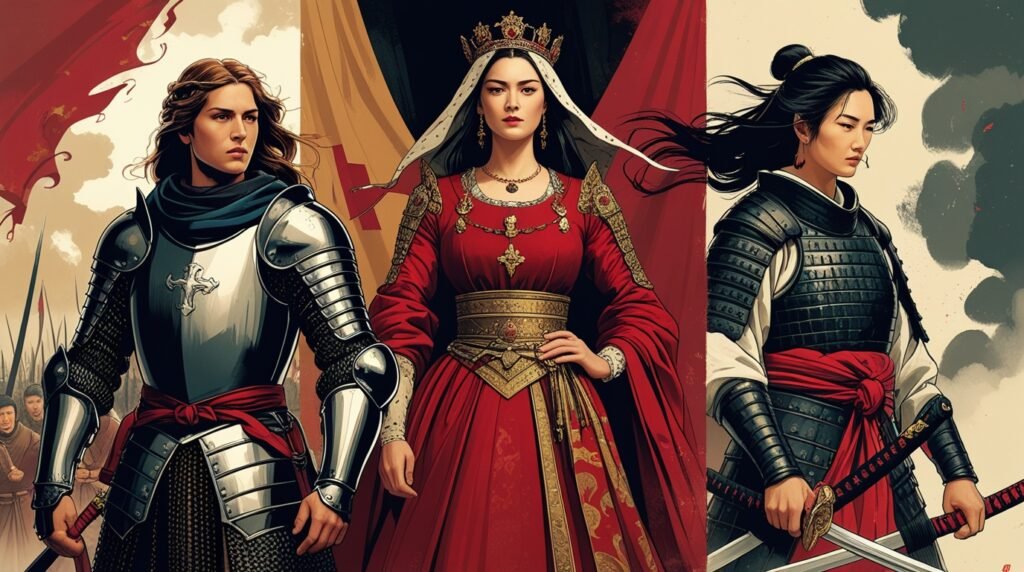
Joan of Arc, Margaret of Anjou, and Tomoe Gozen came from very different worlds, but all three left behind the same undeniable truth: women were never just bystanders in medieval history. They led, fought, endured, and in some cases became larger than life. Whether through faith, political fury, or battlefield legend, these medieval female warriors challenged the limits placed on them and proved that courage has never belonged to men alone


No Comments