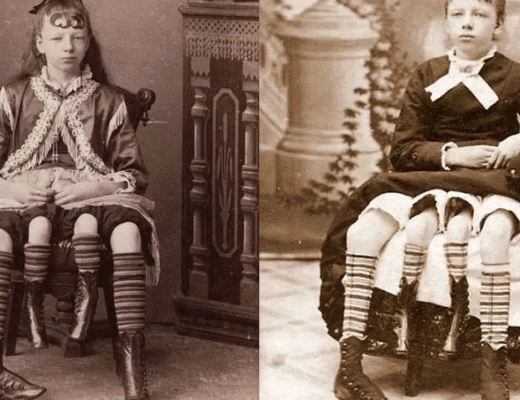

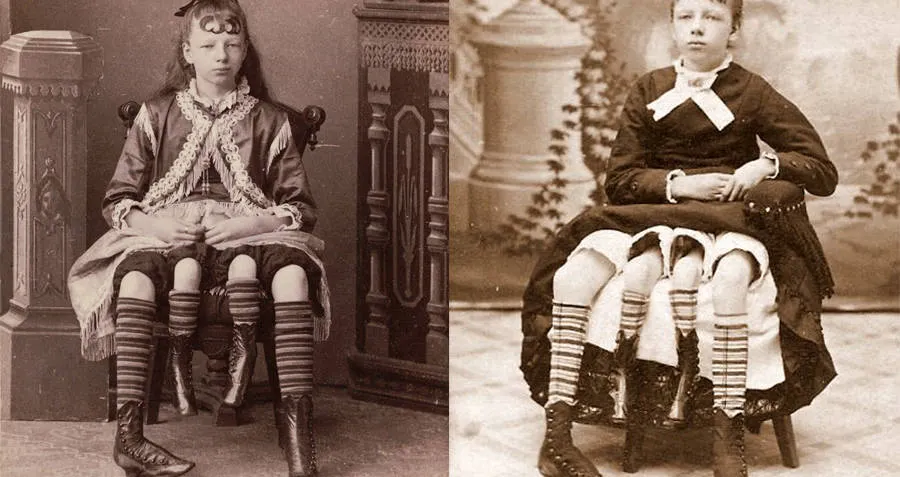
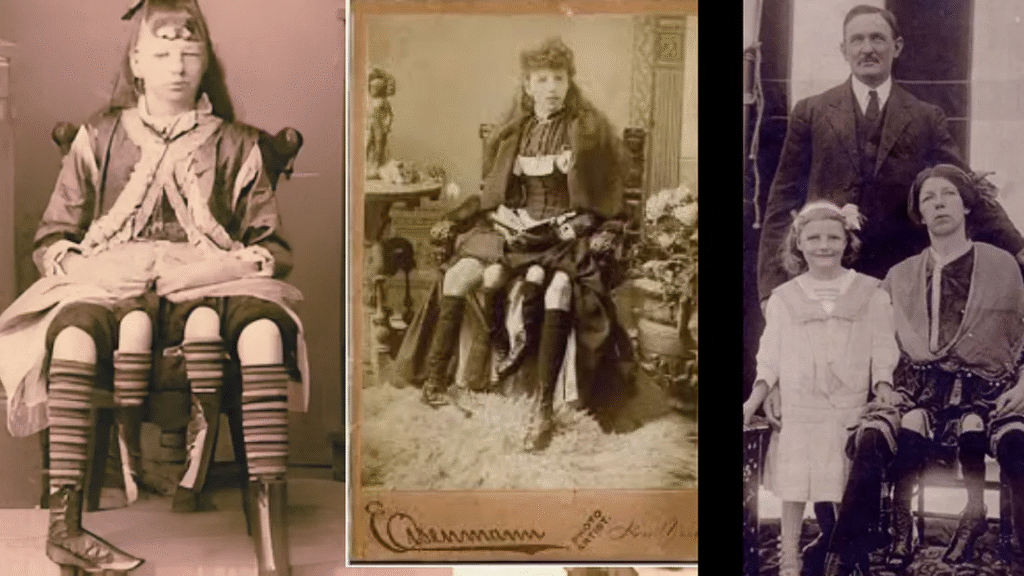
When I first saw a photo of Myrtle Corbin, I honestly did not know what to feel. There was curiosity, of course, but also sadness, admiration, and that strange mix of emotions that comes when you realize there is a real person behind a shocking image. Born in 1868 in rural Tennessee, Myrtle would later become known to the public as “The Four-Legged Girl from Texas.” But behind that headline was not just a medical oddity or a sideshow attraction. She was a real woman with a complicated life, and her story was about far more than the way she looked.
A Rare Birth That Stunned Doctors
Myrtle Corbin was born with an extremely rare congenital condition known as dipygus, a disorder that caused her body to divide at the waist. In simple terms, she had two separate pelvises and a smaller second pair of legs, a condition so unusual that it immediately stunned the people around her. For doctors of the time, Myrtle was seen as a medical curiosity. For her family, though, she was their child first. Her parents, William and Nancy Corbin, were said to be shocked by her birth, but they were also loving and protective. Her father later described Myrtle as a gentle, intelligent little girl who laughed easily and seemed naturally curious about the world around her.
From Small-Town Girl to Sideshow Star
By the time Myrtle Corbin was a teenager, her life had already taken a path few people could have imagined. Word of her rare condition spread quickly, and before long, a showman saw an opportunity. He reportedly offered Myrtle’s family a large sum of money to exhibit her in traveling sideshows, turning the young four-legged woman into a public attraction. From a modern point of view, that idea feels uncomfortable, and honestly, it should. But in the late 1800s, sideshow performers often occupied a strange place in American culture. They were stared at, judged, and sensationalized, yet many of them were also widely known, heavily advertised, and treated almost like celebrities by the crowds who came to see them.
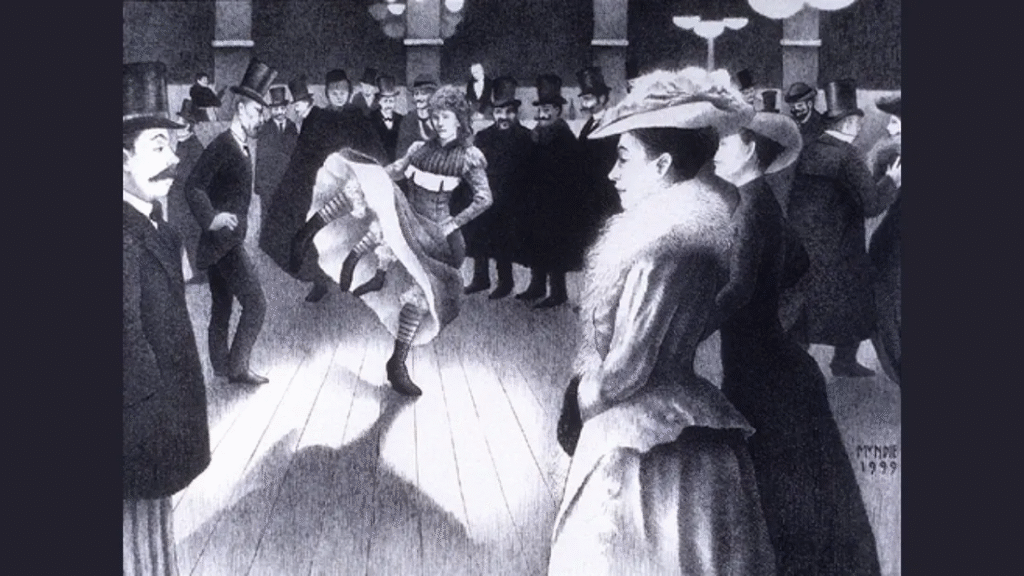
Myrtle’s performances were often presented as refined rather than crude, which helped set her apart from the harsher image people now associate with sideshows. She was known for dressing elegantly, carrying herself with grace, and meeting the public with a calm smile that made a lasting impression. That did not erase the fact that people came to look at her because she was different, but it does suggest that Myrtle understood how to move within that world on her own terms as much as she could. More importantly, the work gave her something many women of that era did not have: financial independence. Before she was even twenty years old, Myrtle Corbin was earning her own money and supporting herself comfortably.
A Love Story the World Didn’t Expect
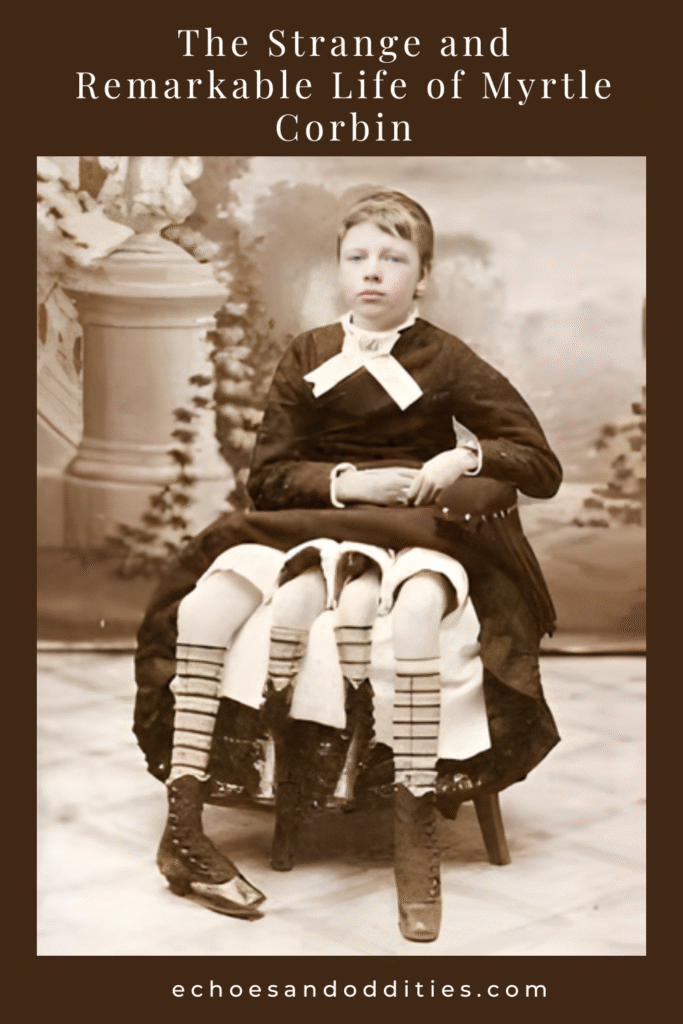
In 1886, when Myrtle Corbin was still only 19 years old, she married James Clinton Bicknell, a man who is often described as loving her not as a curiosity or exhibit, but as a woman. That matters, because so much of Myrtle’s public life had been shaped by people staring at her body before seeing the person she really was. Their marriage showed another side of her story, one rooted in love, companionship, and ordinary human hopes. Together, Myrtle and James built a family and had five children, something that surprised many people at the time. To the public, her body had long been treated as something strange and unbelievable, but her life proved again and again that she was more than the labels placed on her. She was a wife, a mother, and a real woman living a real life.
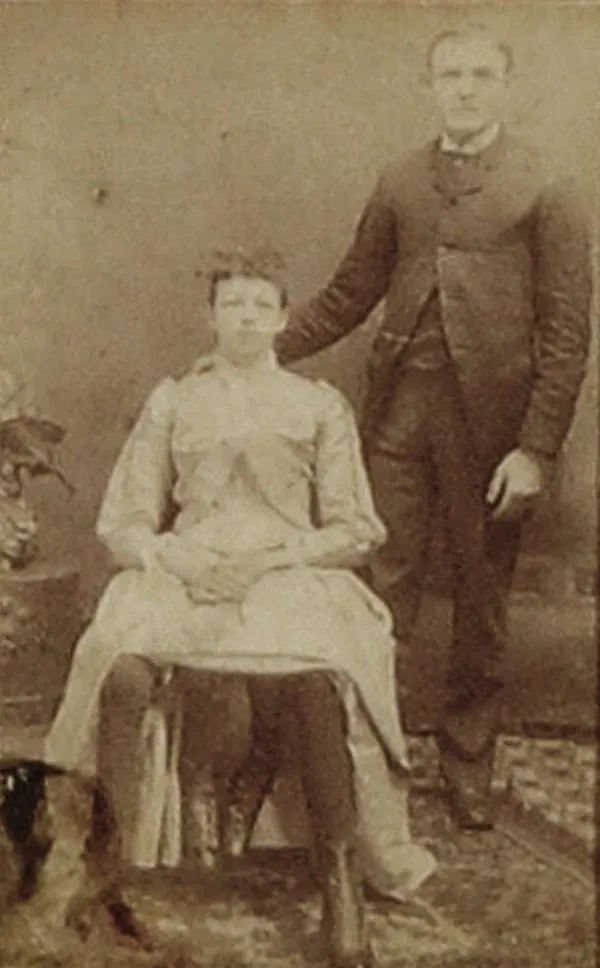
Even during this more private chapter of her life, Myrtle Corbin could not fully escape the public fascination that had followed her for years. Doctors studied her pregnancies with intense interest and even published medical reports about her body and anatomy, treating her life as something to be examined and explained. But while the medical world focused on the unusual details, Myrtle’s attention was somewhere else entirely. Her priority was not becoming a case study. It was building a home, raising her children, and caring for the family she loved. In time, she stepped away from public exhibition altogether and settled into a quieter life in Texas, far from the crowds that had once turned her into a spectacle.
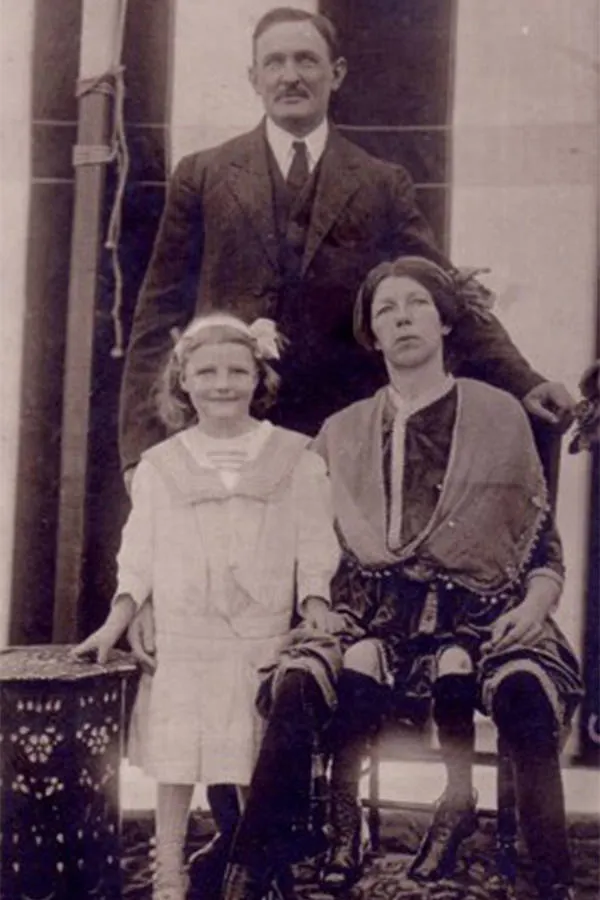
Myrtle Corbin did not let the world’s gaze become the whole story of her life. Instead of allowing herself to be defined only by public curiosity, she built a home, devoted herself to her family, and shaped a life that was far more grounded and meaningful than the headlines ever suggested. That may be one of the most remarkable parts of her story. She lived in a world eager to reduce her to a spectacle, yet she still managed to create a life on her own terms. When Myrtle died in 1928 at the age of 59, even her burial reflected the strange fascination that had followed her for decades. Fearing grave robbers might try to disturb her resting place, her husband had her grave reinforced with concrete. It was a sad and telling reminder that, even in death, people still saw her as rare and extraordinary.
Her Legacy of Strength and Dignity
What moves me most about Myrtle Corbin’s story is not just how unusual her body was, but how much grace she seemed to carry through a world that constantly stared at her. It is hard to imagine living in a time when strangers would pay money just to look at you, yet Myrtle appears to have met that reality with dignity, resilience, and a quiet kind of strength. Somewhere inside that very public life, she still found room for humor, love, and a sense of self that went far beyond the labels placed on her. That is what makes her story feel so powerful. Myrtle was unusual, yes, but she was never just an oddity. She was a woman who lived, loved, adapted, and endured in a world that often saw only her difference.
More Than a Curiosity
Sometimes when I read or write about people like Myrtle Corbin, I think about how easily their humanity can disappear beneath medical language, old newspaper headlines, and the public’s hunger for something unusual. It is easy for history to remember the shock value first and the person second. But Myrtle was never just a medical condition, a circus attraction, or a strange headline from another era. She was a woman who lived through curiosity, judgment, and constant public attention, yet still built a life filled with love, family, and quiet strength. To me, that is what makes her story linger. Myrtle Corbin was more than a curiosity. She was unforgettable not simply because she was different, but because she refused to let that difference be the only thing that defined her. If strange but true stories like Myrtle Corbin’s fascinate you, you may also enjoy reading my article on 15 Weird Facts About the World That Sound Completely Fake.


No Comments