



There’s something about a mystery with no ending……
The kind that makes you pause…
The kind that makes you wonder if the truth is still out there, just waiting to be uncovered.
Some cases fade with time. Others refuse to let go.
These are the stories that still haunt investigators, historians, and everyday people alike—mysterious disappearances and strange events that, even years later, remain unsolved.
These are some of the most baffling unsolved mysteries—cases that still haunt investigators and leave more questions than answers.
Bobby Dunbar: The Boy Who Wasn’t

The Bobby Dunbar case is one of those unsolved mysteries that feels more disturbing the deeper you go. In the summer of 1912, four-year-old Bobby Dunbar disappeared during a family outing near Swayze Lake in Louisiana, setting off a frantic search and heartbreaking uncertainty for his family. Eight months later, a boy believed to be Bobby was found in Mississippi traveling with a handyman named William Walters. But Walters insisted the child was not Bobby Dunbar at all. He claimed the boy was actually Bruce Anderson, the son of a woman named Julia Anderson. Julia backed up that claim and pleaded for her son, creating a painful and confusing battle over the child’s true identity. Despite conflicting stories, public pressure, and Julia’s insistence that the boy was hers, the child was ultimately returned to the Dunbar family and went on to live his life as Bobby Dunbar.
Years later, the mystery resurfaced when Margaret Dunbar Cutright, Bobby Dunbar’s granddaughter, began looking deeper into the strange story surrounding her grandfather’s identity. After receiving old articles and records about the case, she teamed up with Linda Traver, a granddaughter of Julia Anderson, to investigate what had really happened. Through years of studying letters, newspaper reports, and court documents, Margaret convinced her father to take part in DNA testing. The results were shocking. The man raised as Bobby Dunbar was not biologically related to the Dunbar family line, strongly suggesting that he was Julia Anderson’s son all along. That revelation only made the case even sadder, because it meant the real Bobby Dunbar was never found, and what truly happened to him remains unknown.
The Mysterious Fog of 536 AD: A Darkness Descends
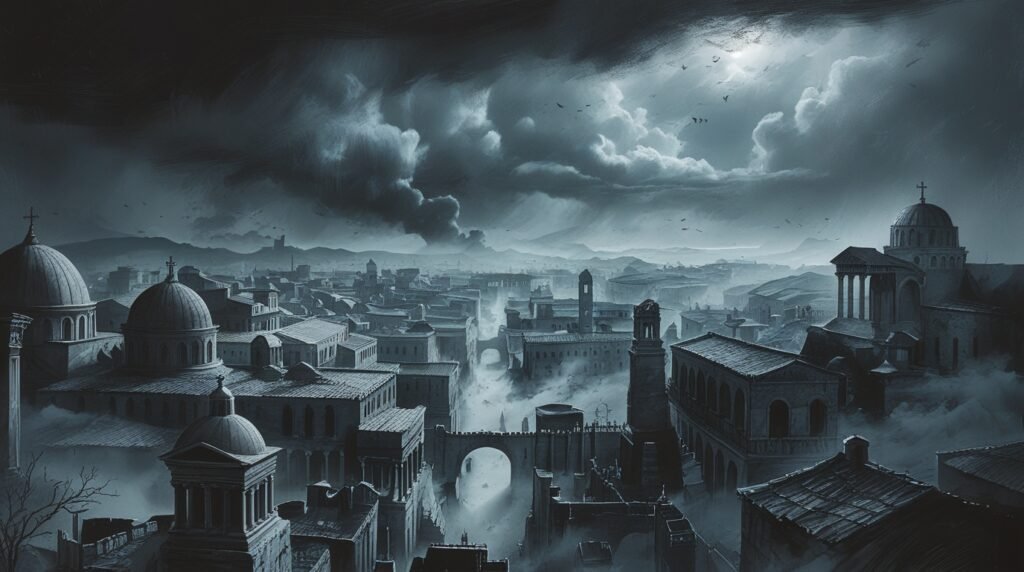
Among history’s strangest unsolved mysteries, the event of 536 AD still stands out as one of the most haunting. That year, a strange haze or dust veil spread across Europe, the Middle East, and parts of Asia, casting an eerie dimness over the sky for many months. Contemporary writers described the sun as weak and unnatural, almost as if the world had been placed under a veil. The result was not just unsettling skies, but a cascading environmental disaster. Temperatures dropped, crops failed, and famine followed as communities struggled to survive through conditions they could not understand. Today, many historians and scientists believe the darkness was most likely triggered by one or more massive volcanic eruptions that blasted sulfur and ash into the atmosphere, blocking sunlight and disrupting weather patterns on a huge scale, though the exact source of the eruption is still debated.
The effects were severe and long-lasting. Modern research suggests that 536 marked the beginning of one of the coldest decades in the Northern Hemisphere in the last 2,000 years. Historical records from China describe unusual summer snow and failed harvests, while tree-ring and ice-core studies point to widespread cooling and agricultural collapse across multiple regions. For people living through it, this was not just a strange weather event. It was the beginning of years of hardship, hunger, and death. Then, as if the climate disaster were not enough, the Justinianic Plague arrived in 541 and spread through the Byzantine Empire and beyond, killing enormous numbers of people and placing even more strain on an already battered world.
The Crazy Brabant Killers: One of Belgium’s Most Disturbing Unsolved Mysteries

The Crazy Brabant Killers case remains one of Europe’s most chilling unsolved mysteries. Between 1982 and 1985, a ruthless gang carried out a series of terrifying robberies and shootings across Belgium, mainly in Brabant, leaving 28 people dead and 22 others injured. The attackers were often described by the nicknames “The Giant,” “The Killer,” and “The Old Man,” and what made the case so disturbing was not just the violence, but the sheer brutality of it. These were not ordinary robberies. The gang often seemed to use shocking, excessive force, even when very little money was taken, which only deepened the mystery and made many people wonder if something bigger was going on behind the scenes.
Over the years, the case has sparked endless theories. Some believed the killings may have involved far-right extremists, corrupt law enforcement, or even an attempt to destabilize Belgium during a tense political era. Others wondered if the robberies were a cover for more targeted crimes. But despite decades of investigation, no one has ever been convicted, and the true identities of the killers remain unknown. That uncertainty is part of what makes this case so haunting. It is not just violent. It is layered with conspiracy, fear, and the uneasy feeling that the full truth may have been buried on purpose.
Even now, the case refuses to fully die. Among the most talked-about clues are DNA linked to a cigarette butt and a mysterious photograph anonymously mailed to police in 1986 showing a man in the woods holding a shotgun. In 2020, Belgian police released that image to the public, hoping someone might finally identify him. The investigation was formally closed in 2024, but in 2025 prosecutors said a new lead had emerged and additional witness hearings were approved, meaning this dark chapter is still not completely finished. Decades later, the Brabant Killers remain one of Belgium’s most disturbing and unresolved crimes.

The Skeleton in the Tree: Who Was Bella in This Unsolved Mystery?
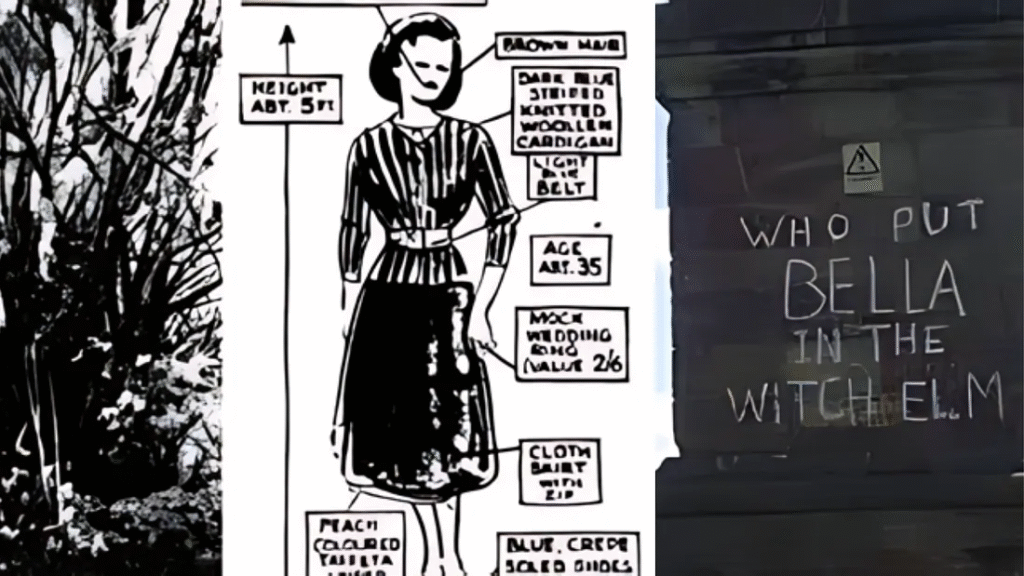
In 1943, four teenage boys made a horrifying discovery while wandering through Hagley Wood in Worcestershire, England. Wartime rationing was still in effect, and the boys had gone into the woods to look for birds’ nests while poaching on the estate. One of them climbed a large wych elm, expecting to find a nest tucked inside the hollow trunk. Instead, he came face to face with a human skull. At first, the boys panicked and left, but one of them later told his parents, and police were called to the scene. When authorities searched the tree, they found the almost complete skeleton of a woman, along with fragments of clothing, a shoe, and a gold wedding ring. Tufts of hair were still clinging to the skull, making the discovery even more chilling.
The remains were examined by Home Office pathologist James Webster, who concluded that the victim was a woman who had been dead for at least 18 months, placing her death in or before October 1941. He also found a piece of taffeta stuffed into her mouth, leading investigators to believe she had likely been suffocated. The woman was thought to be around 35 years old and about 5 feet tall. Then the case took an even stranger turn when the remains of one of her hands were found some distance away from the tree. Despite efforts to identify her through dental records and missing persons reports, no one could say for certain who she was.
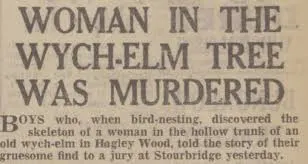
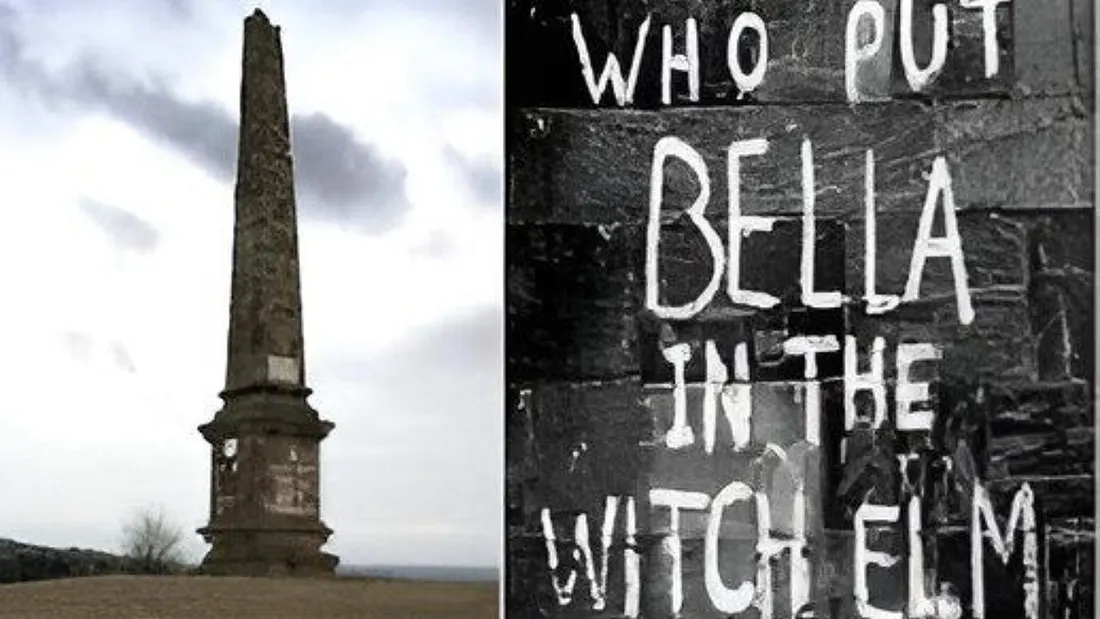
Months later, eerie graffiti began appearing in the area asking who had put “Bella” in the wych elm, and that haunting message is what gave the unknown victim her name. Over the years, people have thrown out all kinds of theories. Some believed Bella may have been killed in some kind of occult ritual, partly because of the severed hand and later speculation about a so-called Hand of Glory. Others thought she may have been connected to wartime espionage and silenced because she knew too much. But none of those theories were ever proven. Decades later, Bella’s identity is still unknown, and the question of who put her in the wych elm remains one of England’s most haunting unsolved mysteries.
The Body on Somerton Beach: An Unsolved Mystery That Still Haunts Australia
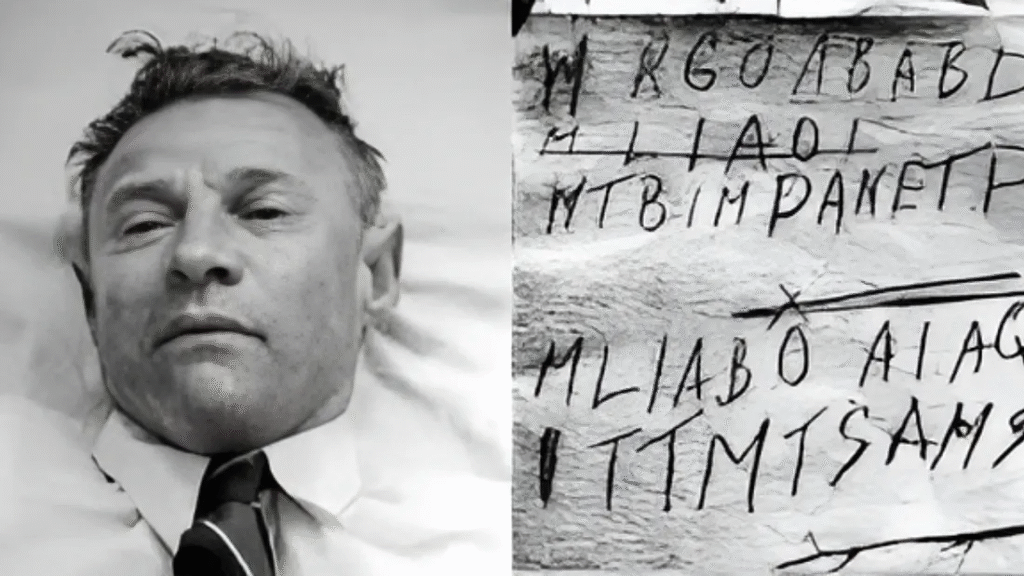
On the morning of December 1, 1948, the body of a well-dressed man was found on Somerton Beach near Adelaide, Australia. He was slumped against a seawall, wearing a suit, tie, and polished shoes, and at first glance he looked almost peaceful. But the deeper investigators looked, the stranger the case became. He carried no identification, no wallet, and no hat, which was unusual for the time. Even more suspicious, all the labels had been carefully removed from his clothing, making it seem as though someone had gone out of their way to hide who he was.
Authorities were never able to pin down exactly how he died. An autopsy failed to provide a clear answer, though several experts believed poison was still a likely possibility. Tests did not uncover any common poison, which only made the mystery more frustrating. He was healthy-looking, physically fit, and there were no obvious signs that explained why he had suddenly died alone on the beach. With no confirmed name, no clear cause of death, and almost nothing to trace him by, the case quickly became one of Australia’s most famous unsolved mysteries.
Then came the clue that made the case even stranger. During the investigation, police found a tiny scrap of paper hidden inside a concealed fob pocket in the man’s trousers. Printed on it were the words “Tamám Shud,” a Persian phrase meaning “ended” or “finished.” That clue eventually led police to a copy of The Rubáiyát of Omar Khayyám, inside which they found a phone number and a mysterious handwritten code that has never been fully explained. For decades, the man’s identity remained unknown, and theories ranged from suicide to espionage. In 2022, DNA research pointed strongly to him being Carl “Charles” Webb, a Melbourne-born electrical engineer, but that identification has not been officially confirmed by police, and the cause of his death is still unresolved. That means the Somerton Man remains haunting not just because of who he may have been, but because no one can say for certain what really happened to him.
Walter Collins: A Mother’s Nightmare and an Unsolved Mystery
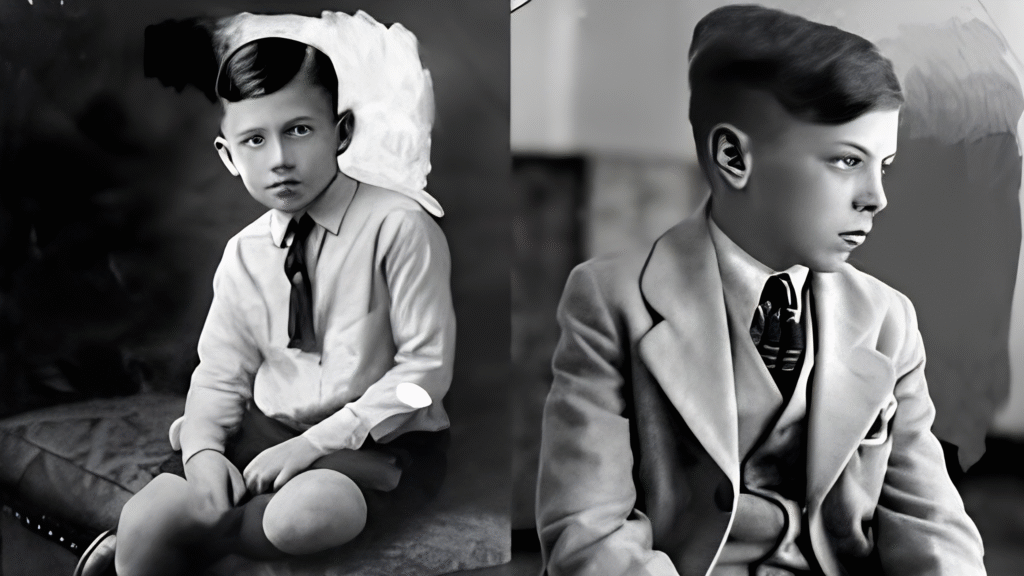
In 1928, nine-year-old Walter Collins disappeared in Los Angeles, setting off one of the most heartbreaking unsolved mysteries in American history. His mother, Christine Collins, reported him missing and spent months desperately hoping for answers. Then came what should have been a miracle. A boy claiming to be Walter was found in Illinois and brought back to California. But the moment Christine saw him, she knew something was wrong. She insisted the boy was not her son. Instead of listening, police pressured her to take him home anyway and told her to “try the boy out,” as if a mother would not know her own child
Christine lived with the boy for about three weeks before going back to authorities and again telling them he was not Walter. Rather than taking her seriously, Captain J. J. Jones and the LAPD turned on her. She was accused of being unstable and was committed to the psychiatric ward at Los Angeles County Hospital under a Code 12 hold. Not long after, the truth finally came out: the boy was actually Arthur Hutchins Jr., a runaway from Iowa who had impersonated Walter in hopes of getting to Hollywood and meeting his favorite actor, Tom Mix. The revelation was shocking, but it also exposed just how far officials had gone to force a false happy ending onto a grieving mother.
As the case unfolded, investigators began linking Walter’s disappearance to Gordon Stewart Northcott and the horrifying Wineville Chicken Coop murders. Northcott’s mother, Sarah Louise Northcott, confessed to helping kill a boy she said was Walter and was sentenced to life in prison, but Walter’s body was never found. Gordon Northcott denied killing him, and because there was never a definitive recovery of Walter’s remains, an awful uncertainty still hangs over the case. Christine never stopped searching or hoping, and that is part of what makes this story so devastating. It is not just a case about a missing child. It is also about a mother who knew the truth, a police department that refused to listen, and a mystery that still leaves behind more questions than answers.
Paula Jean Welden: The Disappearance That Stunned a Campus and Became an Unsolved Mystery

In December 1946, Paula Jean Welden, an 18-year-old sophomore at Bennington College in Vermont, vanished while heading out for a hike near the Long Trail. She told her roommate she was taking a study break and going for a walk, but she did not say exactly where she was headed. Later that day, witnesses reported seeing her after she left campus, including a motorist who picked her up for part of the way and others who saw her walking toward the trail. When Paula failed to return, a massive search began, involving local authorities, volunteers, students, National Guard troops, firefighters, and outside investigators. But despite all that effort, no trace of her was ever found.
As the days passed, the case drew major attention and a flood of theories. Some people believed Paula may have become lost in the woods or died from exposure, while others suspected abduction, murder, or that she had chosen to disappear on purpose. But no theory was ever proven. What made the case so haunting was the total lack of physical evidence. No body, no belongings, and no clear explanation were ever found, turning Paula Jean Welden’s disappearance into one of the most unsettling missing-person cases of its time.
Paula’s case also had a lasting impact far beyond Bennington. The way the investigation was handled exposed serious weaknesses in Vermont’s law enforcement system, which at the time had no statewide police agency. The public criticism that followed helped lead to the creation of the Vermont State Police in 1947. Even now, Paula Jean Welden’s disappearance remains unsolved, leaving behind the same uneasy questions that first stunned her campus and the wider community back in 1946.
Some of these unsolved mysteries may one day be explained, while others may remain forever trapped in speculation. What makes them so fascinating is not just the suspense, but the way they reflect our deep need to understand the world around us. As people continue to search for clues and piece together old evidence, these cases remind us that history does not always give us clear answers—and that sometimes the most haunting stories are the ones that remain unfinished.

No Comments