

The Question on The Wall
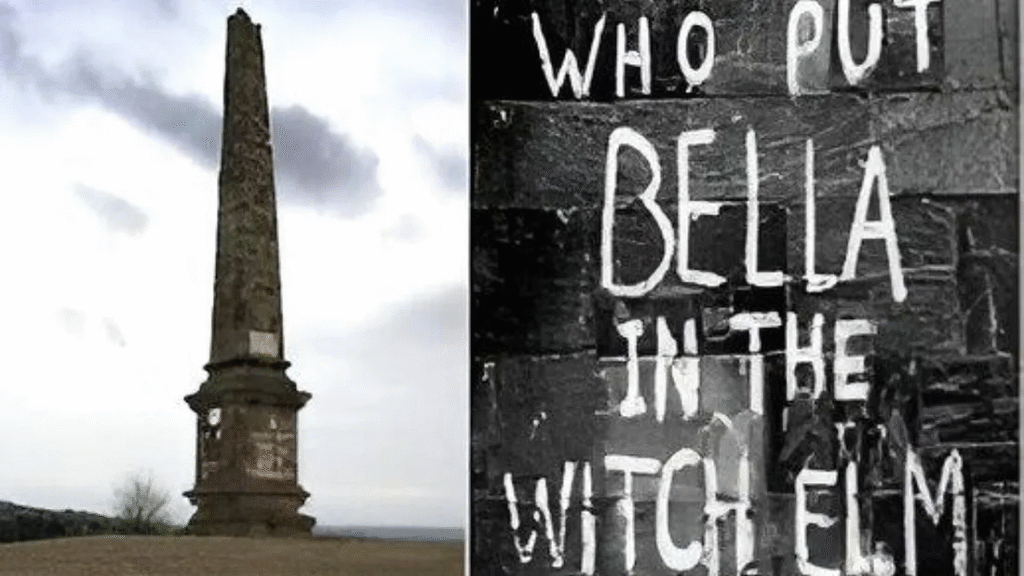
There are some mysteries that announce themselves loudly — sirens, headlines, breaking news. And then there are the ones that arrive quietly, almost politely, as a question. Who put Bella in the Wych Elm? It wasn’t shouted. It wasn’t explained. It simply appeared, scrawled on walls and bridges near Hagley Wood during wartime Britain, as if someone wanted the question to linger long after the answers had vanished.
At the time, the question must have seemed unsettling but vague, especially in a country already living with unease. Britain in the early 1940s was no stranger to fear. The war had normalized loss, secrecy, and silence. People disappeared. Lives were disrupted. Rumors traveled faster than facts. And yet, this question was different. It didn’t ask what happened — it asked who. It implied responsibility. It suggested that someone knew the truth and chose not to speak it.
What makes the question so haunting isn’t just that it remains unanswered, but that it centers a name. Bella. Not “the woman.” Not “the body.” A name, written as if she once belonged to the world outside the woods — as if someone wanted to remind others that the remains found years later were not just a mystery, but a person. That single act of graffiti transformed a hidden death into a public reckoning, one that would outlive the war itself.
Wartime Britain — Why This Case Took Root
To understand why Bella’s death remained hidden for so long — and why her discovery caused such unease — it’s important to understand the world she disappeared into. Britain in the early 1940s was not a place where every absence raised alarms. The country was at war, and daily life was shaped by disruption, fear, and an overwhelming sense that the ordinary rules no longer applied.
Wartime Britain was defined by movement and loss. Cities were bombed, neighborhoods emptied, and families separated. People relocated frequently, sometimes without leaving forwarding addresses or paper trails. Foreign nationals arrived for work, refuge, or military purposes, while others vanished quietly into factories, farms, or temporary lodgings. In this environment, it was possible — tragically possible — for someone to disappear without immediate notice.
Fear also sharpened suspicion. Espionage was not an abstract idea but a real concern, fueled by propaganda, arrests, and whispered rumors. Strangers were watched closely, yet paradoxically, disappearances were often accepted without question. There were simply too many crises competing for attention. A missing woman did not always make headlines when entire cities were being reshaped by war.
Hagley Wood itself reflected this uneasy atmosphere. Woodlands became places of both refuge and secrecy during the war — used for shortcuts, storage, meetings, and sometimes concealment. They were spaces where the boundaries between safety and danger blurred. A body hidden there could remain unseen for years, protected by silence as much as by soil and bark.
This context matters because it explains how Bella could vanish without immediate alarm — and why, when her remains were finally discovered, the case felt less like an isolated crime and more like something born from the shadows of war itself.
The Discovery in Hagley Wood (April 1943)
In April 1943, Hagley Wood was quiet in the way only English woodland can be—undisturbed, ordinary, and unremarkable to anyone passing through. The war raged elsewhere. Life, where it could, carried on. It was in this setting that a group of local teenage boys entered the woods, not in search of answers or trouble, but simply to explore. Accounts vary on exactly what they were doing—some say they were looking for bird eggs, others say they were trespassing for the thrill of it—but none of them expected to uncover anything more than the usual detritus of the forest floor.
What they found instead would alter the woods’ identity forever.
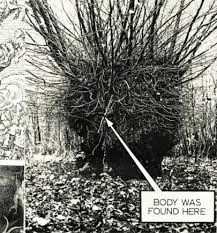
Inside a hollow wych elm tree, one of the boys noticed something pale and unnatural. At first glance, it may not have immediately registered as human. The interior of the tree was dark, cramped, and decaying, its hollow space concealed by bark and shadow. But as they looked closer, the realization set in: it was a skull. Not buried. Not scattered. Placed deliberately inside the tree.
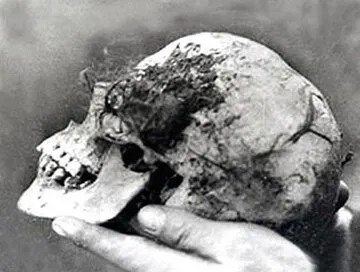
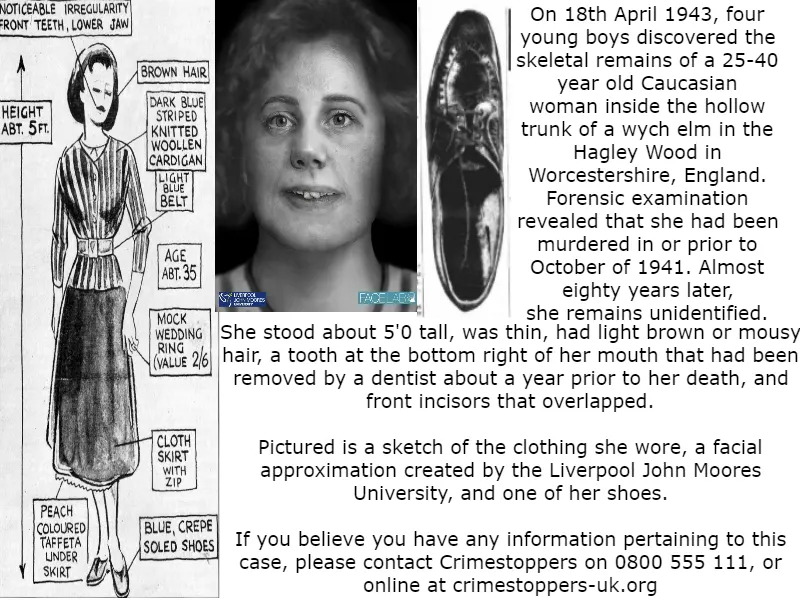
Authorities were alerted, and when police arrived to investigate, the discovery grew more disturbing by the minute. Inside the tree, officers recovered an almost complete skeleton belonging to an adult woman. Alongside the remains were fragments of clothing and a single shoe—items that hinted at a life interrupted rather than abandoned. A wedding ring was also found, modest and unassuming, but significant nonetheless. It suggested connection, commitment, and a world beyond the woods.
The positioning of the body raised immediate questions. This was not a careless disposal. The hollow of the tree was narrow, requiring effort and intention to use as a hiding place. Investigators believed the woman had been placed inside the tree shortly after death, likely before rigor mortis had fully set in. It was a chilling conclusion: someone had acted quickly and with purpose.
As the remains were examined further, another unsettling detail emerged. A piece of taffeta cloth had been forced into the woman’s mouth. The implication was difficult to ignore. This was not an accident. The likely cause of death was suffocation.
Even more puzzling was what was missing. One of the woman’s hands was not found with the rest of the remains. Later, hand bones were discovered some distance away from the tree, deliberately separated from the body. Whether this was done to mislead investigators, obscure identification, or for reasons never recorded, the absence would become one of the most debated aspects of the case.
What began as an afternoon in the woods had uncovered something far darker: the remains of a woman hidden in plain sight, her body concealed not by soil, but by silence. At the time, she had no name. No identity. Only questions—questions that would linger long after the war, etched not just into memory, but onto walls and stone.
Forensic Findings — What Investigators Believed Happened
Once the remains were recovered from the wych elm, investigators faced an immediate challenge: time had already erased many answers. The body had not been recently placed in the tree. Exposure to the elements, insects, and the natural decay of the woodland environment meant that only partial conclusions could be drawn. Still, the examination that followed offered a haunting outline of Bella’s final moments.
The forensic assessment was overseen by James Webster, who concluded that the remains belonged to an adult woman, estimated to be between her mid-thirties and early forties. She was believed to be of average height, with brown or dark hair. Her teeth, particularly in the lower jaw, were noted as irregular — a detail that investigators hoped might one day aid identification.
Determining how long Bella had been deceased was more difficult. Based on the condition of the remains and surrounding evidence, investigators estimated she had been dead for at least eighteen months, possibly longer. This placed her death sometime in or before 1941, at a point when wartime disruption was already reshaping everyday life in Britain. It was a sobering realization: Bella may have been gone for years before anyone knew to look for her.
The most disturbing forensic detail came from the condition of her mouth and throat. A piece of taffeta cloth had been forcibly lodged inside. While decomposition limited certainty, investigators believed this was not incidental. The placement of the fabric strongly suggested that Bella had been suffocated. This was not an accidental death, nor the result of illness or exposure. Someone had intentionally silenced her.
The positioning of the body further supported this conclusion. The hollow of the wych elm was narrow and awkward, requiring deliberate effort to use as a hiding place. Investigators believed Bella had been placed inside the tree shortly after death, before rigor mortis fully set in. Once the body stiffened, positioning it in such a confined space would have been extremely difficult. This detail implied planning, urgency, and familiarity with the location.
One element remained conspicuously unresolved: the missing hand. Although hand bones were later recovered some distance from the tree, their separation from the rest of the remains raised troubling questions. Whether the removal was practical, symbolic, or intended to hinder identification was never conclusively determined. What was clear was that it was not accidental.
Taken together, the forensic findings painted a grim but restrained picture. Bella was not lost. She was hidden. Her death was not sudden misfortune, but a deliberate act followed by deliberate concealment. Yet even with these conclusions, the most essential truth remained out of reach. Investigators could describe how Bella likely died — but not who she was, or why someone wanted her erased from the world so completely.
The Missing Hand — The Detail That Changed Everything
Among all the unsettling details uncovered during the investigation, none provoked more speculation than the absence of one of Bella’s hands. It was not immediately apparent at the scene, but as the remains were cataloged and examined, investigators realized that her right hand was missing. This was not a minor oversight. It was a detail that would shift the case from a tragic homicide into something far more ambiguous.
Later searches of the surrounding area produced hand bones discovered some distance away from the tree. Accounts vary on the exact measurement, but the separation was significant enough to suggest intention. The hand had not simply fallen away through natural processes. It had been removed or displaced deliberately.
This discovery raised troubling questions. If the goal was concealment, why separate part of the body? Removing a hand did little to obscure the cause of death and did not meaningfully aid in hiding the remains. If the intention was to prevent identification, the logic was incomplete—fingerprints were already impossible to recover after such prolonged exposure, and no identifying jewelry was found on the hand itself.
Theories began to emerge almost immediately. Some believed the hand was removed to confuse investigators or to suggest a secondary crime scene. Others speculated that it may have been taken as a personal token or to delay discovery. Over time, more folkloric interpretations entered the conversation, fueled by European myths involving severed hands and symbolic rituals. These ideas captured public imagination, but investigators themselves remained cautious. There was no direct evidence that ritualistic practices played any role in Bella’s death.
What made the missing hand so unsettling was not just its absence, but its implications. It suggested a level of control exercised after death—an action taken when urgency had already passed. Whoever placed Bella in the tree had time to make decisions, to alter the scene, and to shape what would eventually be found.
This single detail transformed the case. Bella was no longer just an unidentified victim hidden in a hollow tree. The missing hand introduced intent beyond concealment, hinting at motives that could not be easily categorized. It invited speculation, but offered no clarity. And in a case already defined by silence, it became one more question layered atop many others—an absence that spoke louder than what was present.
Who Put Bella in the Wych Elm?” — The Graffiti That Refused to Let Her Be Forgotten
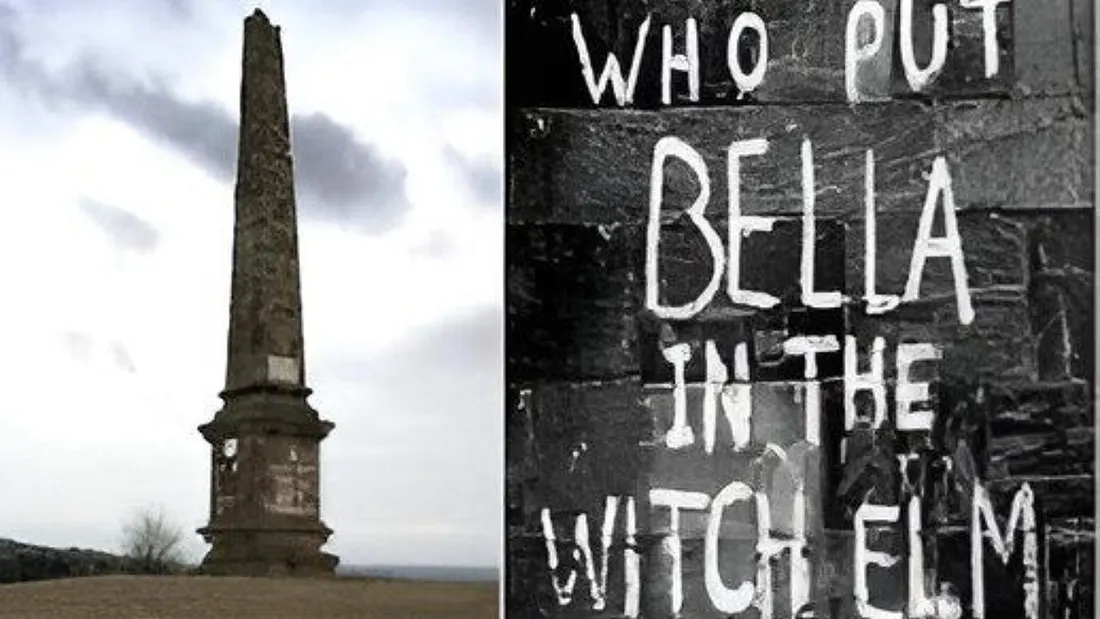
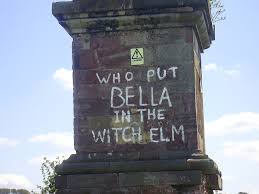
Sometime after the discovery of Bella’s remains, a new and unsettling element entered the case—not through police files or forensic reports, but through the streets and bridges surrounding Hagley Wood. Chalked and painted onto brick, stone, and concrete appeared a question that would permanently define the mystery: Who put Bella in the Wych Elm?
Unlike rumors whispered behind closed doors, the graffiti was public and deliberate. It did not describe the crime or offer sympathy. It did not ask what happened or why. It asked who. The phrasing implied responsibility, even knowledge—suggesting that someone, somewhere, already knew the answer.
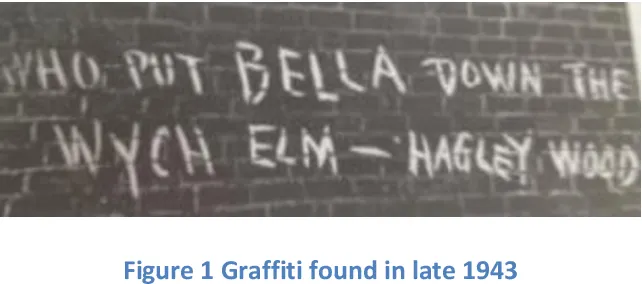
Early versions of the message varied slightly, with some reportedly referencing “Bella” by different spellings before the phrasing settled into the version that would become infamous. What remained consistent, however, was the insistence of the question itself. It appeared repeatedly, even when authorities attempted to erase it. Each reappearance felt less like vandalism and more like a reminder that the case was unfinished.
The use of a name was especially striking. At the time, the woman found in the tree had not been identified. “Bella” was not a name confirmed by police, yet it stuck. Whether it came from someone who knew her, someone who heard it secondhand, or someone who invented it entirely remains unknown. But the name transformed the case. She was no longer just an unidentified body in official records—she was Bella, a person whose absence demanded acknowledgment.
The graffiti changed how the public engaged with the mystery. What had been a hidden crime became a shared unease, visible to anyone who passed by. It suggested that the truth might not be buried with the body, but living quietly among the surrounding community. For some, the writing felt like a taunt. For others, a plea. Either way, it ensured that Bella would not be forgotten.
Perhaps most unsettling of all is the possibility that the person responsible for the graffiti was close to the truth—either directly involved or aware of something never spoken aloud. Or perhaps it was simply the work of someone disturbed by the injustice of an unnamed woman hidden in a tree. The graffiti offers no answers, only persistence.
In a case already defined by silence, the question on the wall became its loudest voice. And decades later, it remains unanswered—etched not just into stone, but into collective memory.
Theory One — The Confession That Came Too Late
One of the most frequently cited explanations for Bella’s death did not emerge from forensic evidence or police breakthroughs, but from a story told years later—quietly, imperfectly, and too late to be properly tested.
In 1953, a woman named Una Hainsworth came forward with a disturbing account involving her former husband, Jack Mossop, and another man known as Van Ralt or Van Raalte. According to Hainsworth, the men had been drinking heavily when they encountered a woman she referred to only as a “Dutch piece.” She claimed the woman became unconscious, and rather than seeking help, the men placed her inside a hollow tree in Hagley Wood, believing she would wake up.
If true, the implications were grim. The story suggested negligence rather than premeditated murder—an act of abandonment that turned fatal. Hainsworth reportedly stated that Mossop was later plagued by guilt and fear over what had happened. He allegedly spoke of the incident repeatedly, deteriorating mentally before dying in a psychiatric hospital in 1942—before Bella’s remains were ever discovered.
At first glance, the account appeared to align with certain elements of the case. The use of a hollow tree matched the crime scene. The estimated timeframe of Mossop’s death fit within the window investigators believed Bella had been placed in the elm. Even the suggestion that the woman was foreign resonated with wartime Britain’s transient population.
Yet the theory quickly unraveled under scrutiny.
Hainsworth’s statement came a decade after the alleged events. Mossop was already dead and could not be questioned. The other man named in her account could not be conclusively linked to the case. There was no independent evidence placing the men in Hagley Wood at the relevant time, nor any proof that the woman they described was Bella. Crucially, the condition of Bella’s remains—particularly the cloth forced into her mouth—did not easily align with a scenario of accidental abandonment.
Investigators were left with an uncomfortable reality: the story could neither be confirmed nor dismissed outright. It existed in a gray space, suspended between confession and hearsay.
What makes this theory linger is not its strength, but its humanity. It presents a version of events driven by recklessness rather than ritual, fear rather than intent. It imagines Bella not as a target, but as someone failed at the most basic level—left behind when help was possible.
And yet, without corroboration, the confession remains just that: a story told after the fact, shaped by memory, regret, and the passage of time. It offers a narrative, but not closure. Like so much else in Bella’s case, it raises questions without resolving them—another voice added to a mystery already crowded with uncertainty.
Theory Two — The German Spy Rumor and Wartime Paranoia
As Bella’s case circulated beyond local police files and into public consciousness, it inevitably collided with the anxieties of the time. Britain was still at war, and suspicion ran high. In that climate, it did not take long for rumors of espionage to attach themselves to an already unsettling mystery.
The most persistent version of this theory linked Bella to German intelligence operations in Britain. It drew inspiration from the real arrest of Josef Jakobs, a German agent captured in 1941 and later executed. When Jakobs was arrested, authorities found materials suggesting he had been in contact with others, including a photograph of a woman he identified as Clara Bauerle. Over time, speculation emerged that Bauerle—or someone like her—had been sent to Britain as part of a covert operation and met a violent end.
On the surface, the theory felt plausible. Wartime Britain was saturated with spy stories, real and imagined. Foreign accents drew attention. Secrecy was normalized. The idea that an unidentified woman found hidden in a tree might have been a spy eliminated by her own handlers or by someone who discovered her identity was, to many, compelling.
But when examined closely, the theory falters.
Historical records indicate that Clara Bauerle died in Germany in December 1942, reportedly by poisoning. This timeline conflicts with forensic estimates suggesting Bella had died at least eighteen months before her discovery in April 1943—placing her death in or before 1941. No evidence places Bauerle in Hagley Wood, nor links her directly to Bella beyond speculative association. The theory relies heavily on coincidence and atmosphere rather than documented connection.
What this rumor ultimately reveals is less about Bella herself and more about the environment in which her case unfolded. During wartime, unexplained deaths were often filtered through the lens of espionage. Fear made extraordinary explanations feel more reasonable than ordinary ones. A spy narrative offered a kind of order: a reason, a motive, a clean story in a world that felt increasingly unstable.
Yet there is no credible evidence that Bella was involved in espionage, nor that her death was connected to intelligence activity. The spy theory persists largely because it fits the mood of the era and the mystery’s enduring ambiguity—not because it resolves any of the case’s central questions.
In the end, the German spy rumor serves as a reminder of how easily speculation can overtake fact when answers are scarce. It adds intrigue, but little clarity. And like so many theories attached to Bella’s death, it says more about the fears of the living than about the woman who was lost.
Theory Three — Folklore, Ritual, and the “Hand of Glory
Over time, Bella’s case began to absorb something beyond criminal theory: folklore. The missing hand, the hollow tree, the secrecy of the placement—details that were already unsettling on their own—became fuel for interpretations rooted in old superstition rather than evidence.
One of the most repeated ideas connects Bella’s missing hand to a piece of European folklore known as the “Hand of Glory.” In traditional stories, a Hand of Glory was believed to be a magical charm made from the hand of a dead person, sometimes said to have the power to unlock doors, put people to sleep, or protect a thief from being caught. It’s the kind of legend that feels like it belongs to a different century, yet it resurfaced in discussions of Bella because it offered a dramatic explanation for why a hand might be removed and separated from the body.
Over time, Bella’s case began to absorb something beyond criminal theory: folklore. The missing hand, the hollow tree, the secrecy of the placement—details that were already unsettling on their own—became fuel for interpretations rooted in old superstition rather than evidence.
One of the most repeated ideas connects Bella’s missing hand to a piece of European folklore known as the “Hand of Glory.” In traditional stories, a Hand of Glory was believed to be a magical charm made from the hand of a dead person, sometimes said to have the power to unlock doors, put people to sleep, or protect a thief from being caught. It’s the kind of legend that feels like it belongs to a different century, yet it resurfaced in discussions of Bella because it offered a dramatic explanation for why a hand might be removed and separated from the body.
It’s easy to see why this theory took hold. Bella’s remains were not found in a typical grave, nor left out in the open. She was concealed inside a tree—an unusually intimate, almost symbolic hiding place. And the missing hand created a sense that something was done to the body beyond the practical goal of concealment, as if the crime had a second purpose no one could explain.
But this is also where the case requires discipline.
There is no direct evidence that Bella’s death involved ritual practice, occult belief, or folklore-driven intent. The hand bones were later discovered, which suggests the hand was not permanently “kept” in any meaningful way—at least not based on what investigators ultimately recovered. And even the most compelling folklore theories rely on interpretation, not proof: they connect dots that feel emotionally satisfying, not necessarily historically or forensically supported.
That doesn’t mean folklore is irrelevant. It matters because it shows what happens when a case offers too few answers. In the absence of identity, motive, and resolution, people reach for frameworks that can hold the discomfort—stories that explain what feels unexplainable. Folklore becomes a container for fear, especially in a case like this where the facts are stark but incomplete.
Still, the most likely explanation remains the simplest: the missing hand may have been separated for reasons that were practical, impulsive, or personal—reasons lost to time rather than bound to ritual. The folklore theory endures not because it solves the case, but because it matches the eerie emotional weight of it.
And that’s the danger of it. Folklore can make a mystery feel satisfying, even when it pulls attention away from the real tragedy at the center of the story: a woman died, was hidden, and was never given her name back.
What Was Lost — Evidence, Time, and Missed Opportunities
As the decades passed, Bella’s case did not just grow cold—it slowly lost the very pieces that might have offered answers. Like many investigations from the wartime period, it was shaped by the limits of the era: restricted resources, incomplete records, and forensic science that had not yet caught up to the questions being asked.
One of the most significant losses was the physical evidence itself. At some point after the initial investigation, Bella’s skull was misplaced or lost while in police custody. The circumstances surrounding its disappearance remain unclear, but the consequence is undeniable. Without the skull, modern forensic techniques—such as advanced DNA testing, isotope analysis, or refined facial reconstruction—are no longer possible. What once might have been revisited with new technology has instead become inaccessible.
This loss is particularly painful when viewed through a modern lens. Today, unidentified victims from decades-old cases are being named through genetic genealogy, sometimes with only fragments of bone or preserved material. In Bella’s case, even that possibility has been taken away. The window for scientific resolution closed not because the technology failed, but because the evidence did not survive long enough to meet it.
Time itself became another obstacle. Witnesses aged, memories blurred, and those who might have known Bella—or known what happened to her—passed away. Wartime secrecy, fear of authority, and social stigma may have kept people silent when their voices mattered most. By the time public interest surged through graffiti and speculation, the trail was already fading.
What remains is a case defined as much by absence as by presence. Missing evidence. Missing testimony. A missing name. Bella’s story illustrates a broader truth about historical investigations: justice depends not only on discovery, but on preservation. Without it, even the most compelling mysteries risk becoming unsolvable, not because the truth is unknowable, but because it was never protected.
And yet, despite everything that was lost, the case continues to matter. Not because it can still be solved with certainty—but because it reminds us what is at stake when unidentified victims are allowed to slip quietly into history. Bella’s anonymity is not just a failure of identification; it is a reflection of how easily lives can be erased when answers are delayed too long.
Bella as a Person — Not Just a Mystery

By the time Bella’s story reaches this point, it is easy to forget something essential: before she became a question written on walls, before she became a case file or a theory, she was a living woman moving through the world.
The pieces left behind hint at an ordinary life. She wore everyday clothing appropriate for wartime Britain. She owned a modest wedding ring, not ornate or valuable, but meaningful enough to be kept on her hand. Her shoes showed wear. Her teeth bore the marks of dental work and natural imperfection—details so mundane they are deeply human. These are not the traces of someone living on the margins of society, but of someone participating in it.
Some researchers and writers have suggested that Bella may have been a mother. This has never been confirmed, and there is no surviving record that proves it. Still, it is a reasonable possibility when viewed through the lens of her estimated age and the era in which she lived. If she was a mother, then somewhere, at some point, a child may have grown up without answers. Even if she was not, the fact that this question can be asked at all speaks to the life she must have had beyond Hagley Wood—a life interrupted, not defined, by its ending.
What is most striking is how little of Bella’s identity survived the investigation. No confirmed name. No known address. No missing persons report that could be conclusively tied to her. Whatever connections she had—to family, friends, coworkers, or neighbors—were severed completely. Whether through fear, silence, or circumstance, the world she came from never spoke loudly enough to reclaim her.
And yet, Bella persists.
She persists because people continue to ask who she was, not just who killed her. She persists because her story resists neat explanations and demands empathy rather than spectacle. In a case crowded with theories, it is her humanity that risks being overlooked the most—and the one thing that matters most.
To remember Bella as a person is not to romanticize her death, but to acknowledge her life. She was more than a mystery hidden in a tree. She was someone who existed, who mattered, and who deserved to be known by name.
Why the Case Still Matters
More than eighty years after Bella’s remains were discovered in Hagley Wood, the question written on walls still stands—not because it is sensational, but because it remains unanswered. Bella’s case matters because it was never resolved, and because unresolved cases reveal uncomfortable truths about how easily people can disappear.
At its core, Bella’s story is about mystery and trying to figure out who she was. She lived in a time marked by upheaval, fear, and displacement, when lives were frequently uprooted and records were easily lost. In that chaos, it was possible for a woman to vanish without an immediate outcry, for her death to go unnoticed until chance brought it to light. That reality is not unique to Bella, and it is not confined to the past.
Unidentified victims still exist today. Despite advances in forensic science and public awareness, there are countless cases where names are missing, stories are incomplete, and families never receive answers. Bella’s case reminds us that identification is not just a technical process—it is an act of recognition. To name someone is to affirm that they mattered.
The enduring fascination with Bella’s story often centers on theories, symbols, and speculation. But the reason it continues to resonate is simpler than that. It forces us to confront the consequences of silence: what happens when fear prevents people from speaking, when systems fail to preserve evidence, and when time erodes the chance for justice.
Bella’s anonymity is not just a historical curiosity. It is a cautionary reminder. Without care, without documentation, without persistence, even the most disturbing truths can fade into folklore rather than resolution. And when that happens, the person at the center of the story risks being reduced to a symbol instead of remembered as a human being.
The question Who put Bella in the Wych Elm? is lasting not because it invites spectacle, but because it asks for accountability. It challenges us to look beyond mystery and toward empathy—to consider not only how Bella died, but how she lived, and why her life was never reclaimed.
As long as her name remains unknown, the case will continue to matter. Not because it can still be solved with certainty, but because remembering Bella means refusing to let her be forgotten again.
Conclusion — The Question That Refuses to Fade
In the end, Bella’s story offers no neat resolution. There is no final arrest, no courtroom reckoning, no moment where the unanswered questions fall into place. What remains instead is a question that has survived decades of silence—written on walls, repeated in books, and carried forward by those unwilling to let her disappear completely.
Perhaps that is why the case continues to puzzle us. Bella was hidden, but not erased. Someone, at some point, wanted her remembered enough to ask who was responsible. Whether that question came from guilt, knowledge, or simple outrage may never be known. But its persistence ensured that Bella would not vanish quietly into history.
To revisit her story now is not to solve it, but to honor it. Bella was more than a mystery concealed in a tree. She was a woman who lived, who mattered, and who deserved to be known by name. Remembering her is an act of resistance against forgetting—against the idea that time alone can close a case.
The question Who put Bella in the Wych Elm? still stands. And as long as it does, Bella’s story remains unfinished—not lost, but waiting.
If you’re interested in another unsolved mystery with many unanswered questions, you may also want to read about the Circleville Letters case.
Video Overview: Bella in the Wych Elm
For readers who prefer a brief visual overview, this short video summarizes the key details of Bella’s case.
Sources & Further Reading
- For a more contemporary account, check out the article on Bella here, on Wikipedia.
- Here is a good historical account of her story here

No Comments